Preface
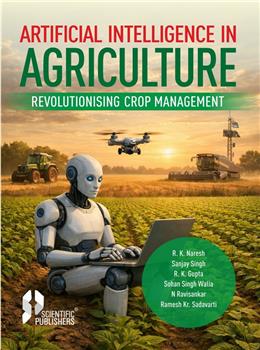
About the Book
Chapter 1: The
Evolution of AI in Agriculture
Chapter 2: AI
in Sustainable Agro-Ecosystem Management
Chapter 3:
AI-Powered Systems for Crop Rotation Management
Chapter 4: AI
for Enhancing Biodiversity in Crop Systems
Chapter 5: AI
and Machine Learning in Crop Diversification
Chapter 6: AI
in Soil Fertility and Nutrient Management
Chapter 7:
AI-Based Systems for Fertiliser Application
Chapter 8: AI
for Predictive Soil Health Management
Chapter 9: AI
for Enhancing Soil Microbial Diversity
Chapter 10: AI
in Weed Detection and Management
Chapter 11: AI
for Sustainable Water Usage in Agriculture
Chapter 12: AI
for Sustainable Agro-Waste Management
Chapter 13: AI
in Drone-Based Crop Spraying Technologies
Chapter 14: AI
for Climate Change Adaptation in Agriculture
Chapter 15: AI
for Smart Greenhouse Management
Chapter 16:
Machine Learning in Agricultural Risk Management
Chapter 17: AI
for Monitoring Soil Moisture and Temperature
Chapter 18: AI
for Enhancing Agrochemical Efficiency
Chapter 19:
Remote Sensing and AI for Crop Growth Monitoring
Chapter 20:
AI-Driven Farm Mechanisation and Automation
Chapter 21:
Robotics and AI in Automated Harvesting
Chapter 22:
Role of AI in Reducing Post-Harvest Losses
Chapter 23:
Role of AI in Food Processing
Chapter 24: AI
Forecasting for Agricultural Market Demand
Chapter 25: AI
in Vertical and Urban Farming Innovations
References