Chapter-1: Introduction and classification
Chapter-2: Structure of different cytochalasins
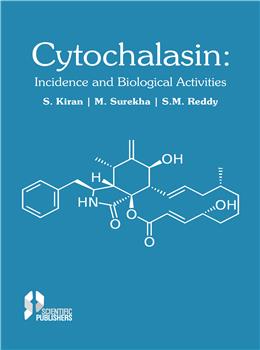
2.1. Cytochalasins
2.2. Aspochalasins
2.3. Alachalasins
2.4. Chaetoglobosins
2.5. Zygosporins
2.6. Deoxaphomin, proxiphomin and protophomin
2.7. Flavichalasins
2.8. Penochalasins
2.9. Epicochalasins
2.10. Asperchalasins
2.11. Spicochalasins
2.12. Rosellichalasin
2.13. Ascochalasins
2.14. Pyrichalasin H
2.15. Periconiasins
Chapter-3: Taxonomy of cytochalasins producing fungi
Chapter-4: Isolation and detection of cytochalasins
Chapter-5: Biosynthesis
Chapter-6: Biological activities
6.1 Cytotoxicity
6.2 Mutagenicity and teratogenicity
6.3 Locomotion and cytoplasmic streaming
6.4 Cytophysiological
6.5 Cell attachment and adhesion
6.6 Cell sorting, aggregation and disaggregation
6.7 Morphogenesis
6.8 Endocytosis
6.9 Exocytosis
6.10 Immunological functions
6.11 Viral infectibility
6.12 Blood clot retractions
6.13 Osmotic balance
6.14 Electro physiological effects
6.15 Axoplasmic transformation
6.16 Metabolic cooperation
6.17 Ovulation
6.18 Pigment granule dispersion
6.19 Interaction with contractile system
6.20 Alteration in membranes structure and function
6.21 Capping and Agglutination
6.22 Antimicrobial and antiparasitic including viruses
6.23 Phytotoxicity
6.24 Pharmacological properties
6.25 Mycotoxins and food spoilage
6.26 Metabolism and macromolecular synthesis
i) Glycolysis
ii) Interaction with hormonal mechanisms
a) Peptide hormones
b) Steroids hormones
Chapter-7: Ecological significance
Chapter-8: Structure- activity relationship
Chapter-9: Management of cytochalasins producing fungi
Chapter-10: Prospects and Future