
Journal Details
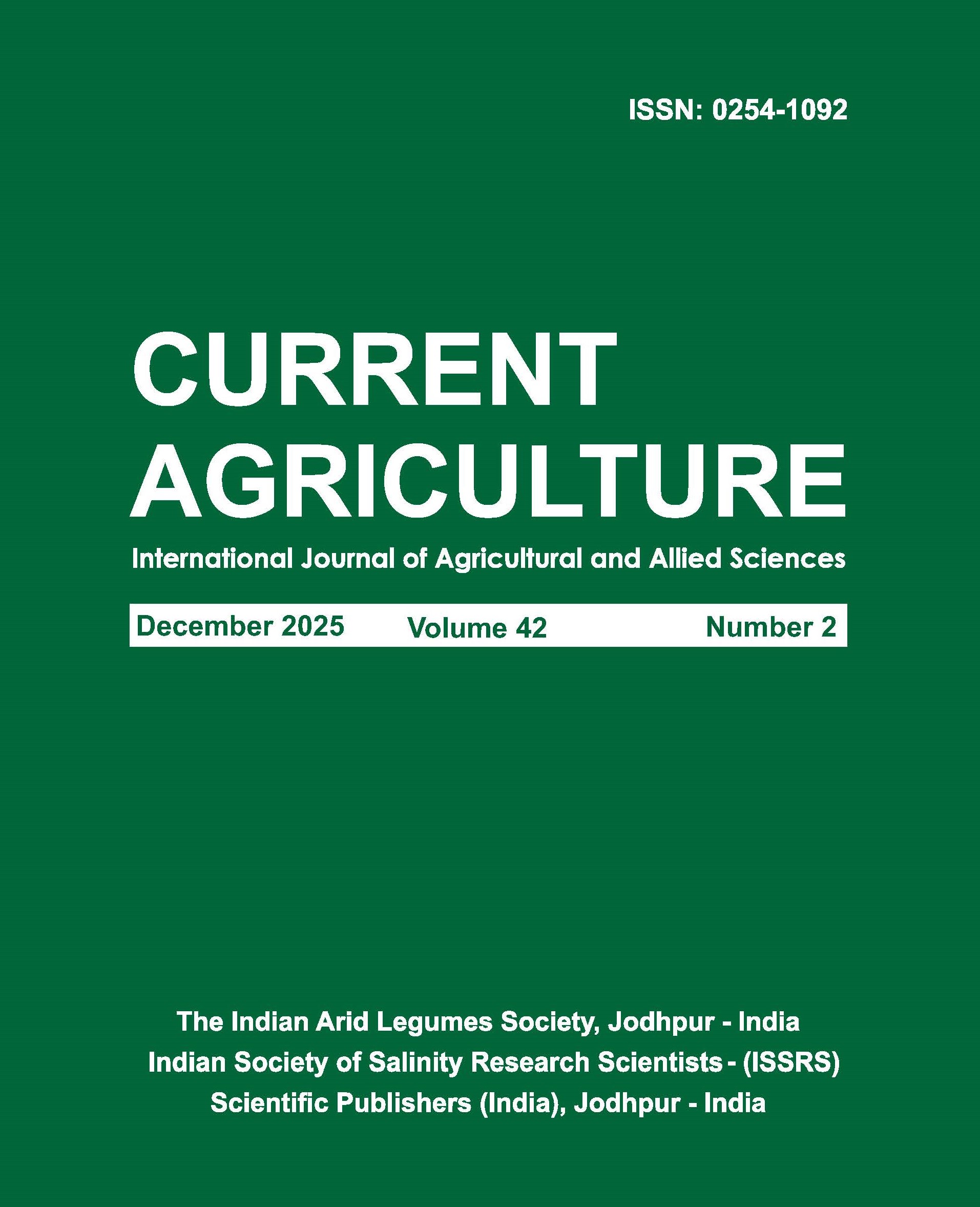
Journal Name : Current Agriculture
Author : D. Kumar
ISSN : 0254-1092
E-ISSN : A/F
Journal Type : Subscription
Stability analysis in gum guar improvement
Manish Sharma & Vineet Kaswan Chirag Gautam and Arvind Nagar

Journal Name : Current Agriculture
Author : D. Kumar
ISSN : 0254-1092
E-ISSN : A/F
Journal Type : Subscription
Manish Sharma & Vineet Kaswan Chirag Gautam and Arvind Nagar


SCIENTIFIC PUBLISHERS
"Granthlok"
5-A,Pali Road,
Bhagat Ki Kothi (Near Riktiya Bheruji Circle)
Jodhpur, Rajasthan
PIN - 342 001, INDIA
WhatsApp: +91-77339-04904
Mobile: +91-92514-76033
Phone: +91-291-2433323
Working Hours: Monday to Saturday
10:00 a.m.-6:00 p.m. (IST).
Email: info@scientificpub.com
Make sure you dont miss interesting happenings
by joining our newsletter program

Government e Marketplace (GeM) is a 100 percent Government owned & National Public Procurement Portal.GeM is dedicated e market for different goods.

© 2026 SCIENTIFIC PUBLISHERS | All rights reserved.